See where chimney leaks really start, part by part.
See the diagram →
Your technician shows you photos and prices the work in writing.
Use the symptom finder →
Usually the pilot, thermocouple or ignition. See common causes.
Use the symptom finder →
Usually heat escaping through thin attic insulation.
Use the symptom finder →One nationwide team with our own technicians in 27 states.
Or call the 24/7 line: (855) 8-CALL-A1
Home»FAQ
FAQ · A1 Chimney & Roofing
Straight answers about chimneys, roofs, gutters, insulation, pricing and appointments. Can't find yours? Call or chat with us 24/7.
Find answers by topic
Have the chimney inspected once a year, before the first fire. A sweep is due when soot or creosote has built up in the flue. For a wood-burning fireplace that is often the same yearly visit. Gas logs still need the flue, cap, and liner checked. How often a sweep is due goes further, and chimney services covers the work.
A sweep removes the soot and creosote built up in the flue. The visit also looks at the firebox, damper, smoke chamber, cap, and the flue itself. You hear what was found before any further work is recommended. See chimney services.
A Level 1 inspection is the routine look. It covers the firebox, damper, smoke chamber, flue, crown, cap, and the chimney flashing, and it fits when the appliance and the way you use it have not changed. A Level 2 inspection adds accessible areas around the chimney, such as the attic or crawl space, and usually a camera look inside the flue. That level fits a home sale, a change of appliance or fuel, or a fire or storm. A Level 3 inspection is for a suspected hidden hazard. It can mean opening a concealed part of the chimney, and it is not the yearly visit.
A roof inspection is a separate look at the shingles, flashing, and active leaks. A1 tells you which chimney level the house needs. You get the findings before any repair is sold.
Stains on the ceiling near the chimney, white powder on the outside brick, crumbling mortar, a rusty or stuck damper, pieces of flue tile in the firebox, or a strong odor from a cold fireplace are reasons to stop using it and book an inspection. Those signs do not name the repair by themselves.
Smoke in the room can come from a closed or stuck damper, a blockage, a cold flue, or a draft problem. Do not keep the fire going to push the smoke out. Let it die down if you can do that safely, and open a window if the room is filling with smoke. Then schedule an inspection. If anyone feels sick, or you suspect combustion gas, get everyone outside and call emergency services before you call A1.
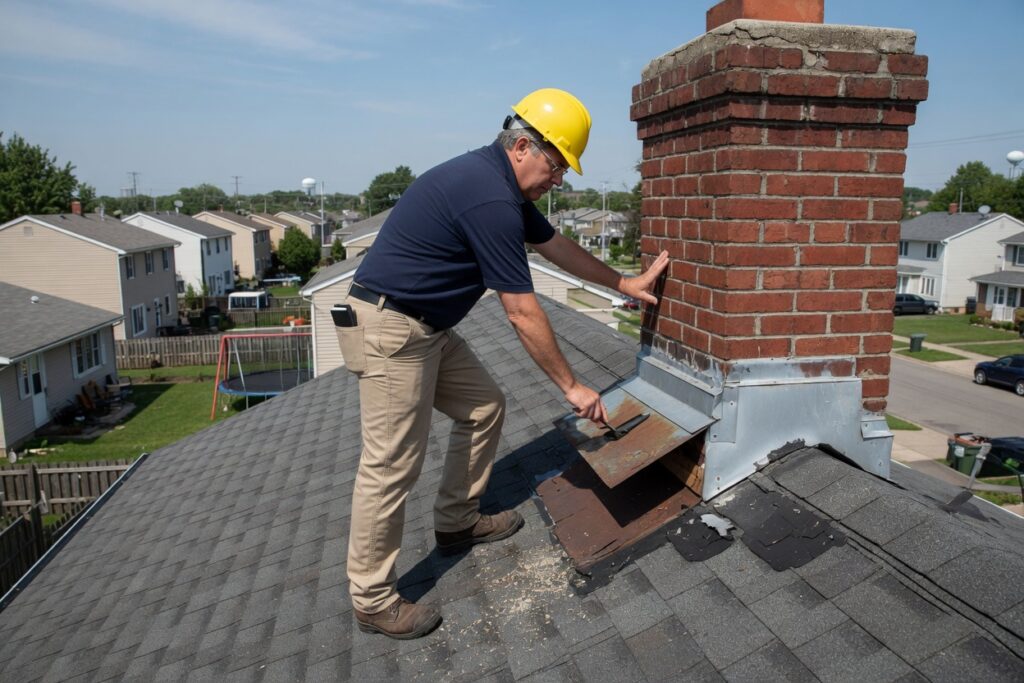
Water near the chimney is often open flashing, a cracked crown, or a cap that no longer sheds rain. It is not automatically a whole roof that has failed. A1 looks at the masonry and the metal flashing together. What a chimney flashing leak usually means.
A new liner is for a liner that is cracked, missing, or the wrong size for the appliance. It is not added on every visit. The inspection shows which of those, if any, applies.
Repair fits cracked masonry, a crown, a cap, or flashing when the chimney is still sound. A rebuild is for a chimney that is leaning, pulling away from the house, or too damaged to patch. The inspection says which one, and the findings come before any repair is sold.
Missing shingles, a stained ceiling, granules in the gutters, or a drip that shows up in rain are reasons for a roof inspection. The inspection looks at the shingles, the flashing, and the pipe boots, and it tells you whether the problem is local. Roofing services.
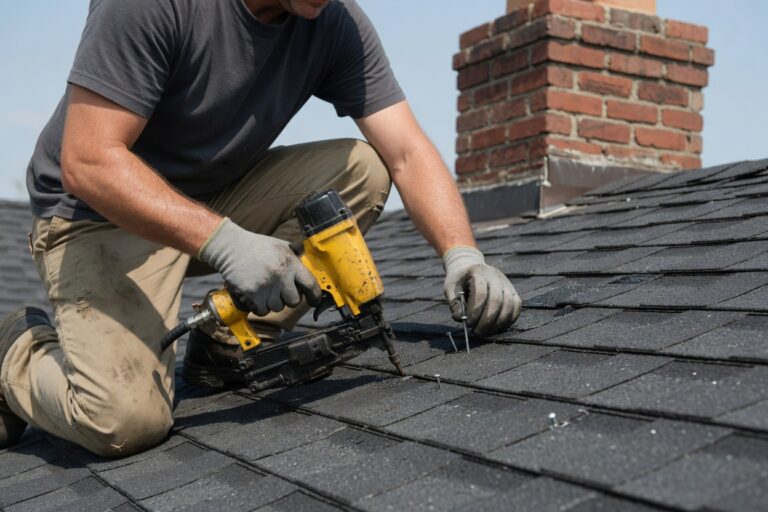
Roof repair fits a leak at the chimney flashing, a pipe boot, or a small group of shingles. Roof replacement fits curled shingles, missing granules across a slope, or leaks in more than one room. A roof inspection tells you which one applies. Roof repair or roof replacement.
Common sources are open chimney flashing, a failed pipe boot, cracked or missing shingles, and worn flashing in a valley. The stain on the ceiling is often not directly under the opening, so the inspection traces the water. Chimney flashing leaks are one of those sources.
Many asphalt shingle roofs are sold with an expected life around 20 to 30 years. Sun, attic heat, and how the roof was installed change that. Age by itself is not a reason to replace a roof. Curling, bare spots, and active leaks matter more.
Asphalt shingles are the common covering on a sloped roof. Metal sheds water in panels or metal shingles. Tile is heavy, so the structure has to carry it. A flat roof uses a membrane rather than shingles. The right one depends on the house. Roofing services is where the work is described.
Yes. Call (855) 8-CALL-A1 any time. The crew secures the opening first, then gives you a written plan for the chimney repair or the roof repair.
It depends on the size of the roof, the deck underneath, and the weather. The estimate gives the schedule for that house. This page does not quote one number of days for every roof.
A roof repair stops water. It is not, by itself, a promise of lower energy bills. Insulation and air sealing are discussed on the energy savings page. An inspection is not a full home energy audit, and A1 does not promise a dollar amount or a percentage before looking at the house.
Clear gutters when leaves and grit stop the water from moving. For many houses that means fall and after heavy storms. A1 does not publish one required interval for every house.
Water pouring over the edge in a normal rain, a sagging run, drips at the seams, stains on the siding, or plants growing in the trough.
A loose hanger or a short leaking seam can be a repair. Replacement fits a trough that is rusted through, pulling off the fascia, or pitched so water sits in it. Gutter services.
Seamless gutters have fewer joints along a run. Sectional gutters are joined in lengths, and each joint is a place that can leak. Fewer joints help. Neither kind stays clear by itself.
A clogged gutter can send water under the shingles at the roof edge and against the foundation. That is a water problem, not only a cosmetic one.
Guards cut down the leaves that land in the trough. They do not end the need to check and clean the gutter. Debris still collects on top of a guard, and small grit can pass through.
Rooms that stay hot or cold, an attic floor with thin or uneven insulation, or drafts at the attic hatch are reasons to look. The only way to know what the house needs is to see what is already there. Insulation.
Blown-in insulation is loose fill added over an attic floor. Fiberglass batts are blankets fitted between framing. Spray foam expands in place and also closes air gaps. Which one fits depends on the attic, what is already installed, and how the crew can reach it. That choice is explained before any work.
Added insulation can slow heat moving through the attic. How much that changes a bill depends on what is already there and how the house is air-sealed. A1 does not promise a dollar amount or a percentage before looking. The energy savings page explains the idea. An inspection is not a full home energy audit.
An open damper is an opening to the outdoors. Close it when the fireplace is cold and there are no hot embers. Do not close it while a fire is burning.
A hot attic can come from blocked soffit or ridge vents, or from too little insulation. Vents are not a substitute for insulation. The visit can say which one the attic is missing.
It depends on the size of the attic and the access. The estimate includes the schedule for that house.
A1 does not publish a flat price for a chimney inspection or a sweep. The price depends on the fireplace, the height, and what the visit finds. You hear the price before any work begins. Request a free estimate.
There is no single published price for a roof inspection. The estimate is free, and it states what the look includes before you agree to repair or replacement. Roofing services.
The cost follows the cause: a flashing detail, a pipe boot, a small group of shingles, or decking that has to be replaced once the shingles come off. The written estimate lists that scope. It is not a price quoted before anyone looks.
Yes. A free estimate explains the findings, the options, and the price before work is scheduled. Get a free estimate or call (855) 8-CALL-A1.
A financing plan is not published on this site. If a payment option is offered for a job, the terms will be in the written estimate. Do not rely on a rate or a term that is not written there.
When payment is due depends on the job and is part of the written scope. There is not one payment rule for every visit on this page.
The price you accept is for the scope in the estimate. If the crew finds more damage, they tell you before adding work. The price does not change without that conversation.
Call (855) 8-CALL-A1 or use Contact Us. Emergency calls are taken any time. A regular visit is scheduled after the office confirms the address and what you are seeing. This page does not promise a same-day visit for every request.
If the visit is inside, clear a path to the fireplace or the attic access and keep pets away from the work area. The office will say if that visit needs anything else.
The office tells you what access that visit needs. Some roof and chimney checks can be done from the outside. Work inside the house needs a way in.
The crew stops and explains anything beyond the agreed scope. Extra work is not added until you have that conversation and a price.
Call (855) 8-CALL-A1 and the office will move the visit.
Yes. Call (855) 8-CALL-A1 any time. For storm damage, the opening is secured first, then you get a written plan.
A1 serves the places listed under service areas and areas we serve. Call and the office confirms the address before the visit. The store locator shows where to find the office.
Call (855) 8-CALL-A1 or use Contact Us. Have the address ready so the office can pull the visit.
Burn dry, seasoned wood. Do not burn trash, cardboard, or wet wood. Keep the damper working, and keep the cap on so animals and rain stay out. If the fireplace starts to smell or draft poorly, stop using it until it is checked.
Stop using the fireplace. If the smell is sharp, or anyone feels dizzy or ill, get everyone outside and call emergency services. A chimney odor or a draft problem can be a blockage or a combustion-gas problem, and it is not something to test with another fire. After the house is safe, call (855) 8-CALL-A1.
Put a container under the drip if you can reach it without climbing. Do not walk on a wet or damaged roof. Call (855) 8-CALL-A1. Emergency calls are taken any time, and the opening is secured before a full repair plan.
Keep downspouts pointed away from the foundation and clear the trough when water starts to overflow. Do not lean a ladder against a gutter that is already pulling off the house. Gutter services.
Warranty terms depend on the work. They are explained with the estimate. This page does not list one warranty that covers every job.
Call (855) 8-CALL-A1 and describe what changed. The office will say whether it needs a return visit. Do not open a repaired flue or pull up new shingles to look.
Book online
Choose the service and a time that suits you. Your A1 technician confirms the visit, inspects, shows you photos and gives you a written price before any work starts.
Prefer to talk? Call (855) 8-CALL-A1 — we pick up 24/7.

Call the 24/7 line. Our team picks up day or night and sends a technician near you.